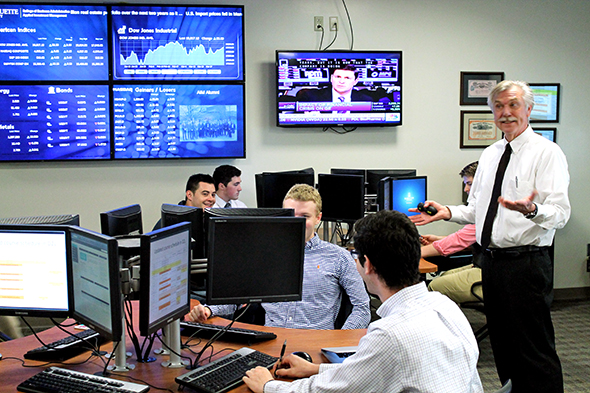
Insight on where the jobs market is heading next, with Craig Columbus, Advanced Equities Asset Mgmt.; Joseph LaVorgna, Deutsche Bank; and CNBC's Dennis Kneale.
Wednesday, June 3, 2009
GM's Real Cause of Death
Investigating the real reason that GM fell, with Peter Flaherty, National Legal & Policy Center; Martin Weiss, Weiss Research; and CNBC's Dennis Kneale.


Inside Look - Inflation vs. Deflation
Roundtable Discussion Featuring Former Fed Vice Chairman Alan Blinder and David Levy of the Jerome Levy Forecasting Center (Bloomberg News).
Inside Look - Has Anything Changed on Wall Street?
Future of the U.S. Banking System - a Bloomberg interview with William Cohan, Author of "House of Cards."
Tom Keene on the Economic Recovery
Interview and discussion with Tome Keene, Bloomberg Editor at large. He discuss the Baltic Dry Index moving in a boomlet attitude. "Nice bounce upward in the Baltic Dry Index."
Rep. Barney Frank Wants New Wall Street Regulations Sooner Rather Than Later
Rep. Frank wants house vote in regulatory reforms by end of July.
Investors pour money into inflation-protected Treasuries

Investors are concerned that stimulus efforts might spark a rise in prices, prompting them to flock to inflation-protected U.S. Treasuries. The yield gap between 10-year nominal notes and 10-year Treasury inflation-protected securities exceeded 2 percentage points for the first time since Lehman Brothers collapsed in September. The developments suggest investors expect annualized inflation to surpass 2% during the next 10 years.
Also, PIMCO Files To Enter Bond ETF Marketplace
It was probably just a matter of time. Pacific Investment Management Co., the home of bond fund maven Bill Gross and the world's largest bond fund manager, registered Tuesday for exemptive relief from the Securities and Exchange Commission to enter the exchange-traded funds market.
Although its filings still weren't up on the SEC's Web site in the morning, PIMCO officials confirmed that they've started the process to come out with a series of bond ETFs.
The first will track the Lehman Bros. Aggregate Bond index, one of the most widely followed U.S. benchmarks. Other ETFs on the market following that same benchmark include the $9.3 billion iShares Lehman Aggregate Bond index (NYSEArca: AGG) and the $1.8 billion Vanguard Total Bond Market ETF (AMEX: BND).
"We think it's a very logical extension. We view the ETF as an important delivery mechanism for our strategies," said Tammie Arnold, a managing director at PIMCO. The Newport Beach, Calif.-based firm now manages about $224 billion in U.S. mutual fund assets. "We have a long history as an active manager," Arnold said. "In respect to our ETF effort, we're evaluating a variety of strategies, both active and passive."
PIMCO also has a large separate accounts business. "We view the ETF business as an important additional vehicle for delivering strategies to our clients," added Arnold. Through June 30, PIMCO managed a total of $830 billion in assets. "Now, we're adding ETFs as another important vehicle," Arnold noted.
The first of PIMCO bond ETFs are likely to follow third-party benchmarks. That indicates at least a passive, or even quantitative, strategy. But with a successful record of managing active bond portfolios, can it be long before an active bond ETF is introduced by the fund giant?
Active Bond ETFs Coming?
The first active ETF was actually a bond fund. That's the Bear Stearns Low Duration Portfolio (AMEX: YYY), which launched on March 25. Its assets aren't readily available on Bear Stearns' Web sites. But a May tally of top ETFs by IndexUniverse.com found YYY had about $50.2 million in assets. That's barely above the nearly $50.1 million it started out with (most likely through seed money Bear Stearns figured it needed to create enough liquidity to launch an ultra-short bond fund).
On April 11, the Invesco PowerShares Active Low Duration Fund (NYSE: PLK) came out. It was also marketed as an active bond ETF. But it has only attracted about $2.5 million in assets so far. By contrast, bond ETFs as a whole had slightly more than $45 billion in assets through June, according to the Investment Company Institute, an industry trade group. That was just a fraction of the nearly $578.1 billion in assets for ETFs as a whole. But it represented a big leap from $25.9 billion a year ago.
"PIMCO's entering the field is great news for the ETF marketplace," said Tom Lydon, a Newport Beach, Calif.-based advisor who also runs ETFtrends.com. "We're still near record lows in terms of interest rates," he added. "With stock markets down, a proven asset manager like PIMCO could be entering at a very opportune time."
The ETF market has seen many new bond competitors come into the field during the past 18 months, he notes. "What PIMCO is probably positioning itself to do is become a major player by getting into bond ETFs early in the game," Lydon said, noting that fixed-income ETFs didn't start proliferating in the marketplace until last year.
A big question, however, is how active PIMCO's offerings will be as its lineup grows. "As of today, there are no active ETFs in the marketplace that don't offer daily transparency," Lydon said. "It'll be interesting to see if PIMCO's filing will attempt to do anything different—if and when they actually enter the active bond ETF market."
Get Ready for More of This: Chinese Company Tengzhong to Buy GM's Hummer

General Motors Corp., seeking to shed assets to emerge from bankruptcy, agreed to sell the Hummer sport-utility vehicle brand to China’s Sichuan Tengzhong Heavy Industrial Machinery Co. Tengzhong will assume Hummer’s dealer agreements and a senior management team, the companies said in a joint statement yesterday. GM and Tengzhong also plan to form a long-term contract assembly and supply agreement. Hummer is worth an estimated $500 million, GM said in bankruptcy court documents.
Selling Hummer will secure more than 3,000 U.S. jobs and help GM move toward a goal of offloading four U.S. brands to exit bankruptcy as a leaner, more profitable company. The deal may also help Tengzhong grow in China’s SUV market, which surged 25 percent last year on rising affluence.
“There are a lot of new rich in China who like niche brands such as Hummer,” said Ricon Xia, a Daiwa Institute of Research (H.K.) Ltd. analyst in Shanghai. “A lot of private companies like Tengzhong have emerged because of the economic boom and they will strike more surprising deals like this one.”
Detroit-based GM has won court approval to sell assets as soon as next month after collapsing under $172.8 billion in debt and failing to adapt to consumer demands for cars that use less fuel. GM also plans to sell Saturn and Saab and wind down the Pontiac line. Sixteen potential buyers have expressed interest in Saturn, Chief Financial Officer Ray Young said on a conference call yesterday.
Tengzhong’s Expansion
For Tengzhong, a privately owned maker of special-use vehicles, structural components for highways and bridges, and construction machinery, buying Hummer will add a brand with cachet it can use to expand in emerging markets, said Desmond Wong, chief executive officer of Chicago-based Sino Strategies Group.
“This is a good acquisition for Sichuan Tengzhong and a good sale for GM,” said Wong. “They can do the manufacturing and marketing in the U.S., but in addition to that they can produce Hummer elsewhere for markets such as China, India and the Middle East.”
The Hummer sale should be completed by the end of the third quarter. Credit Suisse Group AG is acting as financial adviser and Shearman & Sterling is serving as international legal counsel to Chengdu, China-based Tengzhong. Citigroup Inc. is acting as financial adviser to GM.
Chinese Deals
Tengzhong follows SAIC Motor Corp., China’s biggest domestic automaker, and Geely Holding Group Co. in pursuing overseas acquisitions as Chinese automakers seek technology to build more sophisticated and profitable vehicles. Sichuan, where Tengzhong is based, is also a mountainous province full of winding roads suitable for off-road vehicles.
Still, Chinese automakers haven’t always benefited from overseas deals. SAIC bought rights for cars designed by U.K. automaker MG Rover Group Ltd. in 2005 to temper its reliance on partners GM and Volkswagen AG. Last year, GM and Volkswagen vehicles still accounted for more than 90 percent of sales. SAIC’s South Korean unit, Ssangyong Motor Co., entered receivership in February after sport-utility-vehicles sales plunged.
Geely, China’s biggest private automaker, in March agreed to buy Australian gearbox-maker Drivetrain Systems International. The carmaker is also in talks to buy Ford Motor Co.’s Volvo Car Corp. unit, according to people familiar with the situation.
U.S. Support
GM is getting more than $50 billion of loans from the U.S. government to help reorganize after filing for bankruptcy earlier this week. Bill Burton, deputy White House press secretary, reiterated in an e-mailed statement President Barack Obama’s pledge to take a “hands-off” approach to GM.
The U.S. government “is not going to get involved in the day-to-day business decisions of GM -- and this is an example in which it did not,” Burton said. “GM reached an agreement that will keep thousands of Americans working in a situation that could have ended instead with a devastating liquidation of this company.”
GM bought the license for the Hummer brand from AM General in 1999 and started selling the $140,000 H1, a 7,600-pound (3,400-kilogram) SUV patterned after the all-terrain military vehicle popularized for road use by actor Arnold Schwarzenegger, now California’s governor.
While the H1 never sold more than 875 units a year, the model won enough of a following for GM to add the 6,600-pound H2 in 2002. The 4,700-pound H3 followed in 2005. GM also started building the H3 in South Africa in 2006 for Europe, the Middle East and Africa.
Rising gasoline prices eventually eroded demand. GM halted production of the H1 in 2006 as sales dwindled. Hummer’s U.S. deliveries peaked at 71,524 that year, according to Autodata Corp. U.S. sales of the SUVs, which start at about $31,000 for the H3, fell 51 percent in 2008 and 67 percent this year through April.
Subscribe to:
Posts (Atom)